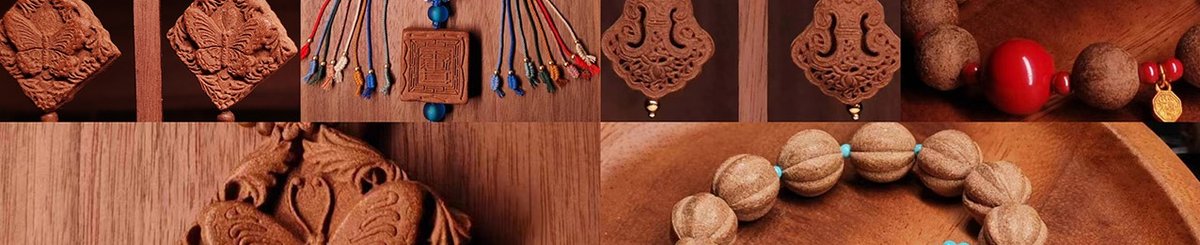

What is He Xiang (Blended Incense)?
He Xiang is the core of traditional incense-making. It is crafted by hand using natural aromatic materials, formulated according to the principles of "Monarch, Minister, Assistant, and Guide" used in Traditional Chinese Medicine.
The History and Background of He Xiang
Humanity has a long history of using natural fragrances. Historical records indicate that in the Spring and Autumn and Warring States periods, China extensively utilized aromatic plants.
During the Qin and Han dynasties, with the unification of the empire and expansion of its territory, fragrant materials from the humid southern regions gradually entered the Central Plains. As the "Silk Road" overland and maritime routes became active, many spices from Southeast Asia, South Asia, and Europe were also introduced to China.
In the early Western Han dynasty, before Emperor Wu of Han, incense burning was already popular among the aristocracy.
In the Wei, Jin, and Southern and Northern Dynasties, people conducted in-depth research into the effects and characteristics of various aromatic substances. They widely employed the blending of multiple aromatics to create unique scents, leading to the concept of "incense formulas" (Xiang Fang). The variety of formulas became rich, and many medicinal incense blends specifically for treating illnesses emerged.
Consequently, the meaning of "fragrance" (Xiang) evolved. It no longer referred solely to "single aromatic materials" but also commonly referred to "incense products made by blending multiple aromatics according to a formula," which later became known as "He Xiang."
The evolution from single aromatic ingredients to the complex use of multiple ingredients represents a significant development in incense products.
The Making of He Xiang
Material Preparation: Selecting suitable aromatic herbs, wood powders, binding agents, and supplementary materials. The aromatic herbs are the core components that determine the fragrance characteristics, efficacy, and grade, typically including natural spices and Traditional Chinese medicinal materials.
Material Processing: Processing the aromatic materials through methods such as crushing, steaming, boiling, stir-frying, charring, or roasting to remove impurities, regulate their medicinal properties, and fully realize their benefits.
Grinding into Powder: Grinding the processed materials into a fine powder for subsequent use. Ancient methods relied on manual grinding, while modern techniques may use powdering machines, though care must be taken to avoid losing fragrance due to heat generated by high-speed rotation.
Blending into Incense: Mixing the aromatic materials one by one according to the incense formula in reverse order, carefully controlling the quantities to ensure thorough mixing. It is best to seal and let the blended incense powder rest for a day to allow the fragrances to meld.
Adding Water and Powder: Weighing and mixing the incense powder and binding powder in proportion. Gradually adding clean water and kneading until the mixture forms a pliable paste.
Kneading and Pounding: Repeatedly pounding the incense paste with a utensil to enhance its stickiness and moisture content, ensuring a uniform texture.
Shaping: Rolling the incense paste into balls and pressing them into desired shapes using molds, such as beads or plaques, then demolding for air drying.
Drying: Drying the shaped incense products in a well-ventilated area until completely dry.
Aging: Some incense products require sealing and aging in a cellar for a period, allowing the ingredients to interact fully and enhance the fragrance.
Polishing: Sanding and polishing the dried incense products to achieve a smooth surface and enhance their aesthetic appeal.
Packaging: Packaging the finished incense products for storage and use.
The creation of He Xiang is a complex process that integrates traditional culture, craftsmanship, and the art of fragrance, requiring the incense maker to possess profound cultural knowledge and exquisite skills. Through these steps, traditional incense products with both beautiful aromas and health-promoting effects can be produced.
Care and Maintenance of He Xiang Ornaments
1. Avoid immersion in water and do not wear He Xiang ornaments while bathing. When not wearing for extended periods, store in a sealed bag to preserve the fragrance.
2. After purchasing incense beads, initially handle them with clean cotton gloves for 1-2 weeks. Afterward, you may handle them with dry hands. Wash your hands before handling.
3. Avoid contact with substances such as chemical fragrances to prevent affecting the scent.
4. Store in a cool, dry place. If the incense plaque becomes damp or moldy due to improper storage, wipe it with a clean cotton cloth or a soft brush; this will not affect wearability.
5. Uneven color depth on the surface of incense beads or plaques may be due to uneven patination or accidental contact with clothing. This can usually be restored through regular handling.
6. Prolonged transportation, or humid weather or environmental conditions, can potentially cause the incense plaque to become damp or moldy. After receiving the item, wipe it and place it in a ventilated, dry area to air dry.


Product Description
Product Details
- Material
- Plants & Flowers
- How It's Made
- Handmade
- Where It's Made
- mainland China
- Unique Features
- Customizable, Pinkoi Exclusive, Eco-Friendly
- Stock
- Down to the last 1
- Ranking
- No.222,593 - Accessories | No.4,129 - Charms
- Popularity
-
- 2,510 views
- 3 have saved this item
- Product Type
- Original Design
- Listing Summary
- Traditional Chinese Herbal Blends: Nourishing the Body with Fragrance Dao Natural's Daoist incense formulas include Dragon’s Blood Resin (Jiang Zhen), Agarwood (Chen Xiang), Curcuma (Yu Jin), Cypress (Bai Xiang), Fast-Burning Incense (Su Xiang), Scrophularia (Xuan Shen), Sichuan Lovage (Chuan Qiong), Agastache (Huo Xiang), and more. Used to purify spaces, calm the spirit, cultivate the self, aid in meditation, and for personal carrying. A gentle fragrance emanates, opening the senses. The blended incense plaques feature hand-painted Gold accents. Use as needed. Dimensions: Length: 53.5mm, Width: 36.3mm, Height: 10.7mm.
Shipping Fees and More
- Shipping
- Payment method
-
- Credit/debit card payment
- Alipay
- Refunds & Exchanges
- Read more about refunds and exchanges
- Report
- Report this item