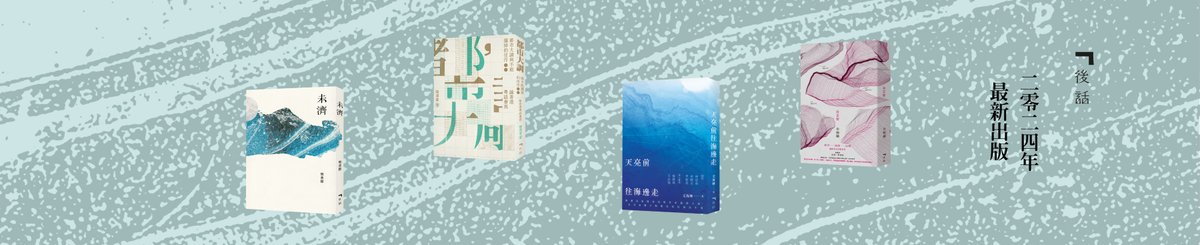

Title | The Long Night of Delirium
Author | Mak Shu-kin
Illustrations | Blue China Studio
Design | Hei Shing Bookbinding
Publisher | Post-Story Publishing House
Publication Date | August 2022
--
In an era weary of farewells, people can leave, buildings can be abandoned, delicacies can be lost, buses can cease operation... Memories are like the Ship of Theseus, constantly being cleared and rebuilt with the city's development. In the depths of midnight dreams, what still lingers in your mind are the stories that contained you?
"Later, Lin Da went alone to the rooftop of Gu De Building to watch the Mid-Autumn Festival night view. This time, Lin Da looked down at the square atrium. Residents from multiple floors hung colorful lanterns in the corridors, and another set of lanterns was suspended in the middle of the atrium by diagonally connecting the corridor railings. Therefore, everyone lost their guard against the dirty well bottom and released sky lanterns there.
The sky lanterns, lit for blessings, flickered and rose, causing a stir among the residents. Words were written on all four sides of the lanterns: Eternal Friendship, Academic Progress, Good Health, May All Wishes Come True, Peace is Bliss." -- "Final Chapter: The Seven Seas Incident"
*The Long Night of Delirium* is the debut full-length novel by Hong Kong writer Mak Shu-kin. The story revolves around the small shop "Happy Joy Provisions Store" in the public housing estate "Gu Ao Estate." Through this essential place for residents' daily needs, the novel weaves together the intertwined lives of ordinary citizens. The turbulent fate of the provision store owner, Su Gan, and his family reflects the rise and fall of public housing estates and the city itself. Anyone who has lived in a housing estate will find the stationery shop, mushroom-shaped food stalls, and family doctor's clinic in the novel familiar; the myriad of lights on the Mid-Autumn Festival, the rainy atrium during typhoon season, and even the neighborhood karaoke carnivals become unforgettable scenes of local life. The dim stairwells, hidden mahjong parlors, and elevators seem to constantly threaten to engulf people.
As a significant urban space in Hong Kong, the public housing estate in the novel is filled with local characteristics in its depiction of daily experiences and details. However, beyond the realistic lives of the common people, mysterious and eerie legends are also passed down through close-knit neighborly relationships. Gu Ao Estate, as depicted by Mak Shu-kin, is a blend of reality and fantasy, where the lives of citizens curiously intertwine with prehistoric beasts, all heading towards a distant and hazy future. Looking back from the other end of time, did this seemingly vivid housing estate, these days of labor, love, and hate, truly exist, or are they merely fabrications, like the mythical Tongtianxi of ancient legends?
Perhaps one day, those who read this book will say—
A long, long time ago, that housing estate was not just buildings and roads,
but also the place where we lived together.
--
◎ Excerpts from Recommendations
Even readers of different generations, as long as they are Hongkongers, will feel a sense of reunion when they read about the Shangcheng depicted by Mak Shu-kin, encountering that provision store, that stationery shop, that shopping mall, that bus, that MTR station, that sports ground, that public housing, that resettlement area, that housing estate. With sincerity, but feigning ambiguity, Mak Shu-kin tells readers: *The Long Night of Delirium* may be "a local chronicle of Shangcheng that will be passed down through generations until the end of humanity."
-- Chan Kwok-kui (Hong Kong Scholar)
Reading *The Long Night of Delirium*, I felt the fine suction of the words, and I couldn't escape the shadows and corners of the old housing estate. It's like looking at the "Along the River During the Qingming Festival" painting rotated ninety degrees, transformed into towering vertical buildings, constantly being added to and growing. If you randomly focus on a place or a person, a story and a voice emerge, revealing the market prices of the past, the flow of human relationships, and the changes of the times. The pop songs and TV dramas that constantly played in the background always bring back memories of old times, but it's more than just sentimentality and nostalgia. Gu Ao Estate is like a meticulously constructed old clock—it is a container of time itself, operating independently of reality, its gears grinding, continuing to weave endless stories. -- Kung Wan-wai (Malaysian Writer and Painter)
In this encyclopedic novel, Shu-kin uses the fictional housing estate "Gu Ao Estate" as its core, telling us a Hong Kong story with a solid foundation in reality, spanning over thirty years from the 1970s. Through the novel's dazzling array of characters, the author, while depicting their living spaces, evokes poignant memories from the lives of several generations.
-- Tong Ye (Hong Kong Writer)
It is like a "manual" that comprehensively portrays not only the physical architecture and living environment of the housing estate but also the daily culture and social relationships shaped by these spaces. To convey all of this might have required numerous specialized studies to piece together a relatively complete picture. Instead, *The Long Night of Delirium*, with its powerful fictional force, showcases countless facets of housing estates through Gu Ao Estate. ...This is a novel that makes you want to visit public housing estates while reading it, and sit there to read it carefully.
-- Wong Yu-hin (Hong Kong Urban Studies Scholar)


Product Description
Product Details
- Material
- Paper
- How It's Made
- Machine-made
- Where It's Made
- Hong Kong
- Stock
- More than 10
- Ranking
- No.65,672 - Stationery | No.2,343 - Indie Press
- Popularity
-
- 1,929 views
- 1 have saved this item
- Product Type
- Original Design
- Listing Summary
- Wherever you are, passing through the tunnel of time, You can still dream of the city that gave birth to me. ◎ Hong Kong writer Mak Shu-kin's debut full-length novel ◎ Recommended by Chan Kwok-kui, Kung Wan-wai, Tong Ye, Wong Yu-hin ◎ The first full-length novel in Hong Kong to depict public housing estates
Shipping Fees and More
- Shipping
- Payment method
-
- Credit/debit card payment
- Alipay
- Refunds & Exchanges
- Read more about refunds and exchanges
- Report
- Report this item