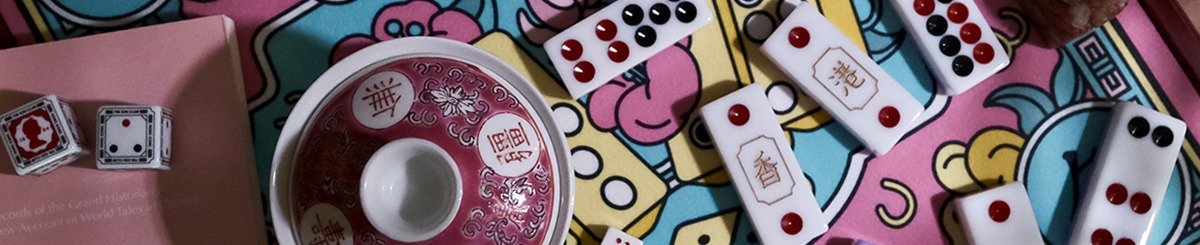

【Master of Both Worlds | Old Hand Hoodie】Learning about Tai Hii, beyond just the game, offers a glimpse into the worldview of ancient Chinese imperial courts.
The dots on Tai Hii tiles are combinations derived from two dice, totaling thirty-two tiles. When first encountering Tai Hii, it's divided into two categories: civil (文子) and military (武子), each representing civil and military officials in the imperial court.
Within the civil tiles, the highest is "Heaven" (天), with six dots plus six dots, totaling twenty-four dots. This symbolizes the twenty-four solar terms of the Chinese calendar, which were derived from ancient observations and records of the sun and moon's trajectories, forming what we now know as the lunar calendar. In modern terms, this concept suggests that everyone should act in accordance with natural principles and not engage in reckless behavior. For instance, continuously importing new immigrants for personal gain or political reasons, and then justifying large-scale land reclamation for population density and economic development, thereby damaging the ecological environment—this is acting recklessly against the natural order and will inevitably lead to retribution.
Next is "Earth" (地), with two dots, one for heaven and one for earth, totaling four dots, symbolizing the four cardinal directions—East, South, West, and North. Following that is "Human" (人), with four dots plus four dots, totaling sixteen dots. This represents the virtues of benevolence, righteousness, loyalty, trustworthiness, propriety, incorruptibility, sense of shame, wisdom, discerning right from wrong, righteous indignation, empathy, sympathy, and humility. Frankly, if people in neighboring countries could grasp even two or three of these virtues, perhaps Dr. Li Wenliang wouldn't have died, we wouldn't have to queue for masks, and our freedom wouldn't be unreasonably restricted. Yet, what we see in reality are selfish individuals who twist right and wrong, black and white, and speak falsehoods every day...
Then comes "Harmony" (和), with one dot plus three dots, totaling eight dots. This symbolizes the circulation of vital energy through the eight joints, signifying peace and prosperity throughout the land. Heaven, Earth, and Human, collectively known as the Four Greats, represent the most widespread philosophical thought in China.
After this somber historical reflection, the final thought is that life can be difficult. However, as long as we persist in doing what we are good at and what our conscience approves, and continuously learn new things and understand history, one person may not achieve success alone. But if everyone gives their all, perhaps one day, there will be an opportunity to start anew. That place will be Hong Kong; that world will be yours.
------------------------------------------------------------------------------------------------
. Screen printed
. Origin | Hong Kong
. Size | S-M / L-XL
. Material | 100% Comfortable Cotton Thick Fabric
S-M
Shoulder Width 47cm
Chest Width 55cm
Length 65.5cm
L-XL
Shoulder Width 50.5cm
Chest Width 62cm
Length 71.5cm


Product Description
Product Details
- Material
- Cotton
- How It's Made
- Machine-made
- Where It's Made
- Hong Kong
- Stock
- More than 10
- Ranking
- No.67,164 - Clothing | No.1,947 - Unisex Hoodies & T-Shirts
- Popularity
-
- 5,829 views
- 1 sold
- 17 have saved this item
- Product Type
- Original Design
- Listing Summary
- 【Master of Both Worlds | Old Hand Hoodie】Learning about Tai Hii, beyond just the game, offers a glimpse into the worldview of ancient Chinese imperial courts. The dots on Tai Hii tiles are combinations derived from two dice, totaling thirty-two tiles. When first encountering Tai Hii, it's divided into two categories: civil (文子) and military (武子), each representing civil and military officials in the imperial court...
Shipping Fees and More
- Shipping
- Payment method
-
- Credit/debit card payment
- Alipay
- Refunds & Exchanges
- Read more about refunds and exchanges
- Report
- Report this item